Crown Street, Wollongong, 2500

Acknowledgement of Country on Australian Websites: Why It Matters and How to Do It Right
Melody Jaimon • July 2, 2025
In recent years, more Australian businesses, organisations, and creatives have added an Acknowledgement of Country to their websites. This small but powerful statement recognises Aboriginal and Torres Strait Islander peoples as the Traditional Custodians of the land. It shows respect for their continuing connection to land, culture, and community.
Let’s explore why this matters, how to get the wording right, where to place it on your website, and how we can help you include it respectfully and professionally.
What Is an Acknowledgement of Country?
An Acknowledgement of Country is a respectful statement that recognises Aboriginal and Torres Strait Islander peoples as the Traditional Owners and ongoing custodians of the land. It honours their enduring cultural and spiritual connection to Country.
Unlike a Welcome to Country, which a Traditional Custodian or Elder must deliver, an Acknowledgement can be made by anyone, including business owners and community leaders, as a sign of respect.
When added to a website, it becomes a public and lasting statement that reflects your awareness of First Nations peoples and your respect for their role in Australia’s past, present, and future.
Why Include It on a Website?

Your website is one of the most visible and permanent representations of your business. Including an Acknowledgement of Country:
- Shows respect for Aboriginal and Torres Strait Islander peoples and cultures
- Recognises the importance of reconciliation and truth-telling
- Supports inclusivity and cultural awareness
- Aligns with modern business values and community expectations
- Acknowledges your presence on unceded Aboriginal land
Even if you're a small business or sole trader, this simple gesture helps present your business as thoughtful, socially aware, and community-minded.
How to Write an Acknowledgement of Country for Your Website
There is no single way to deliver an Acknowledgement of Country; what matters most is that it’s respectful and meaningful.
To help you begin, we’ve provided some practical steps below. However, if you want to ensure your wording is appropriate, we also encourage you to connect with local Elders, Aboriginal Land Councils, or First Nations community organisations.
1. Identify the Traditional Custodians of Your Area
There is no one correct version, but it should be sincere, accurate, and appropriate to your location and context. Here's how to start:
Use resources like:
- AIATSIS Map of Indigenous Australia
- Your local Aboriginal Land Council or local government
Knowing the correct Nation or language group shows genuine respect.
For deeper understanding, consider exploring these organisations:
2. Use Respectful and Appropriate Language
When crafting your statement, consider acknowledging both Aboriginal and Torres Strait Islander Elders, past, present and emerging and use capital letters for Elders, Country and Nation as a mark of respect. Your wording should reference both the people and the land, and if you don’t know the Traditional Owners, a general acknowledgement is appropriate.
General Example:
"We acknowledge the Traditional Custodians of Country throughout Australia and recognise their continuing connection to land, waters and culture. We pay our respects to Elders past and present."
Location-Specific Example:
"We acknowledge the [Nation name] people, the Traditional Custodians of the land on which our business is located. We pay our respects to Elders past and present and extend that respect to all Aboriginal and Torres Strait Islander peoples."
If possible, personalise your Acknowledgement and avoid copying generic text without meaning.
3. Make Sure It Reflects Your Brand’s Voice
While it should always be respectful, your Acknowledgement can still align with your tone — whether it’s warm, educational, professional, or community-focused.
Where to Place It on Your Website

Most businesses choose one of the following options:
- Website Footer: This is a common choice as it makes the message visible across your entire website without distracting from your main content.
- About Page: If your story or values are part of your brand messaging, this is a great place to include the Acknowledgement alongside your business journey.
- Contact Page: If your address is listed, this is a natural place to acknowledge the land you operate on.
- Homepage Banner: Some businesses choose to include a short version on their homepage to make a clear statement up front.
- Dedicated Reconciliation or Community Page: For organisations involved in advocacy, health, education, or social work, a full page may be suitable.
Flags That Often Appear with Acknowledgement of Country
Many inclusive websites choose to display cultural and diversity flags alongside an Acknowledgement of Country. These flags carry deep cultural significance and should always be presented with care and consideration.
At Love My Online Marketing, we share this information with humility and a genuine commitment to cultural respect. If you choose to include these flags on your website, we encourage you to do so in a way that honours their meaning and maintains their integrity.
Below are some commonly used flags, available to download individually or as a complete set for your website design.
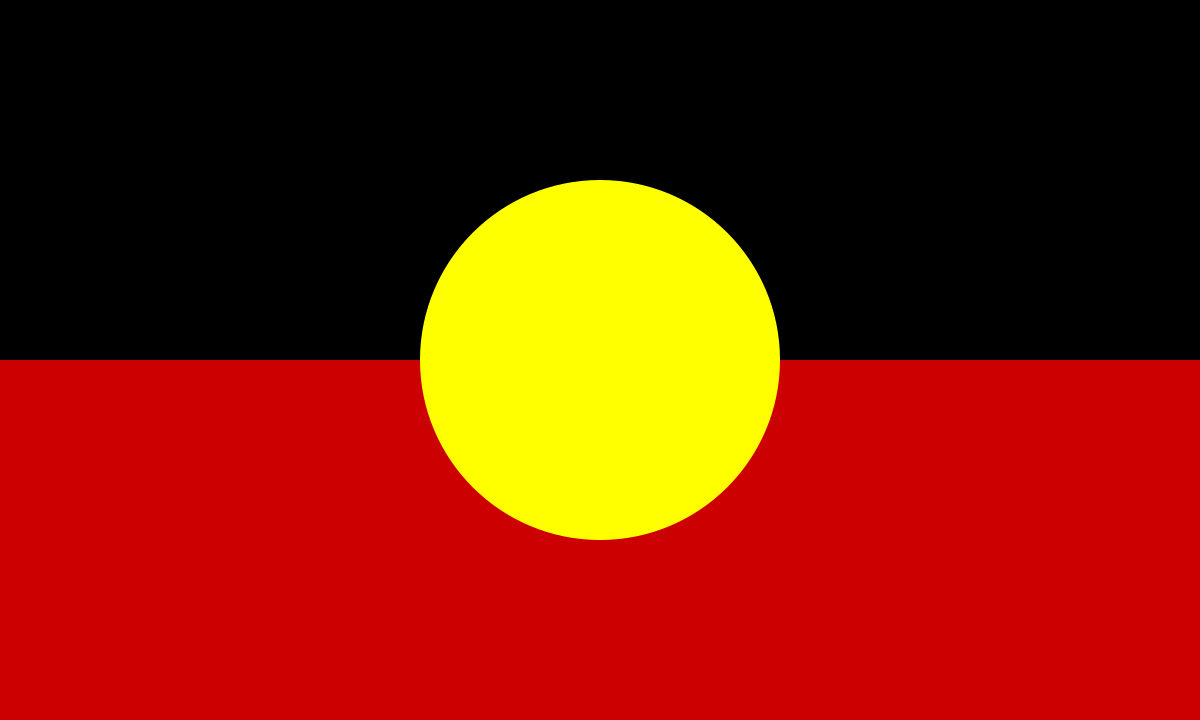
Aboriginal Flag
The Aboriginal Flag is a powerful symbol of identity, unity, and pride for Aboriginal Australians. It was designed by the Luritja artist Harold Thomas in 1970.
- Black represents the Aboriginal people of Australia.
- Red symbolises the earth and spiritual connection to Country.
- Yellow represents the sun, the giver of life.
The flag is commonly used by organisations that value inclusion, such as government, NDIS providers, community groups, small businesses and more. However, it must always be displayed in a respectful and dignified way, never altered, obscured, or used in a way that diminishes its cultural significance.
Torres Strait Islander Flag
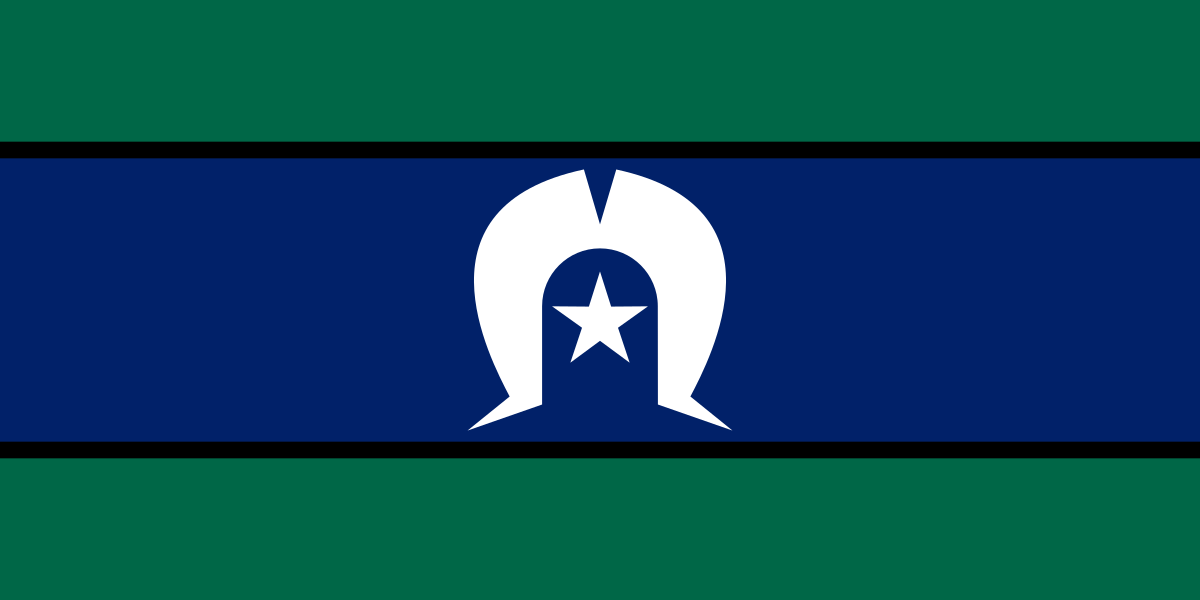
The Torres Strait Islander Flag is a symbol of identity, unity, and culture for Torres Strait Islander peoples. It was designed by Bernard Namok in 1992 and is officially recognised in Australia.
- Green represents the land.
- Blue symbolises the sea.
- Black stands for the people.
- The white Dhari (headdress) and five-pointed star represent Torres Strait Islander culture and the five island regions. White symbolises peace.
The flag is often displayed alongside the Australian National Flag and the Aboriginal Flag to promote unity and respect for all First Nations peoples. Using the correct Pantone colours helps preserve its meaning. It’s widely used by inclusive organisations, such as government, NDIS providers, community groups and small businesses as a symbol of cultural recognition and reconciliation.
Australian National Flag
The national flag of Australia features the Union Jack, the Commonwealth Star, and the Southern Cross constellation. It is often included alongside First Nations flags for context, especially on formal or government websites. While optional, it can complement inclusive messaging.
When shown alongside other flags, it must take the position of honour and must never be altered, defaced, or obscured by text or images. The flag should always be displayed accurately, with all elements clearly visible and in the correct proportions.

Progressive Pride Flag
The Progress Pride Flag is a symbol of LGBTQIA+ inclusion, visibility, and progress. Developed by Daniel Quasar in 2018, it builds on the traditional rainbow flag by adding black and brown stripes to represent marginalised LGBTQIA+ communities of colour, and light blue, pink, and white to represent the transgender community.
The arrow-like design symbolises forward movement and ongoing progress toward equality.
Many inclusive businesses, community organisations, and service providers display the Progress Pride Flag to show support for diversity, inclusion, and belonging.

Download All Flags in One Set
Get the complete pack, perfect for NDIS website design, not-for-profit website design and community-focused organisations.
How We Can Help You Present It Beautifully
At Love My Online Marketing, we help you include an Acknowledgement of Country in a way that is:
- Culturally respectful
- Well-written and tailored to your location
- Visually integrated into your design and brand
- Optional extras like flags, links, artwork, or animations
We aim to make sure your Acknowledgement is not just a box-tick, but a meaningful and visible part of your website.
Final Thought
An Acknowledgement of Country is a respectful step towards truth, inclusion, and reconciliation. Including it on your website reflects more than cultural awareness; it shows your business values integrity, respect, and connection to the communities you serve.
But acknowledgment is just the beginning. Consider how your business can take further steps, whether through community partnerships, donations, education, or inclusive employment, to support Aboriginal and Torres Strait Islander peoples actively.
At Love My Online Marketing, we acknowledge that we are not the cultural authority on this topic. Still, we share this resource with humility and hope it encourages others to listen, learn, and take meaningful action, both online and within their local communities.
We are open to feedback from Aboriginal and Torres Strait Islander readers and welcome opportunities to strengthen the cultural integrity of this content.


Love My Online Marketing has 10+ Years of working alongside businesses and helping them grow. Discuss your options for online success from website Design and Development through to Google Marketing.
Do you want more traffic and business leads?
Love My Online Marketing is determined to make a business grow. Our only question is, will it be yours?